|
|
|
|
 |
|
|
Seeds and fruits
Inspiring and beautiful thoughts for your meditations
|
|
|
|
|
Last updated: 8 December 2018- click here to jump to latest additions.
|
|
|
|
|
|
“The lyre of true philosophy is no less tuneful in the desert than in the city; and he who knows how to call forth its latent harmony in solitude, will not want the testimony of the multitude to convince him that its melody is ecstatic and divine.” (Thomas Taylor, from his History of the Restoration of Platonic Theology)
|
|
|
|
|
“For I am entirely of opinion, that all persons, endued with even the smallest portion of understanding, must deem the knowledge of the real essence of things - the knowledge of that kind of being whose nature is invariable - to be by far the most certain and true knowledge." - Socrates, The Philebus
|
|
|
|
“The idea of the good is the greatest discipline." - Socrates, The Republic
|
|
|
|
|
|
|
“No one is free who has not obtained the empire of himself.” - Demophilus the Pythagorean
|
|
|
|
Great nurse, all-bounteous, blessed and divine, 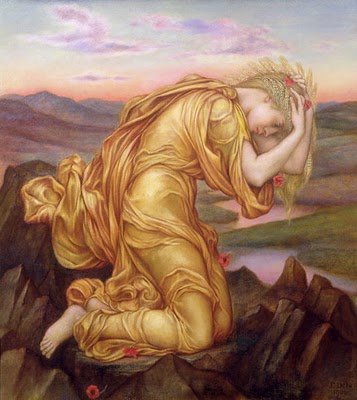
Who joy'st in peace; to nourish corn is thine.
Goddess of seed, of fruits abundant, fair,
Harvest and threshing are thy constant care.
Lovely delightful queen, by all desir'd,
Who dwell'st in Eleusina's holy vales retir'd.
Only-begotten, much-producing queen,
All flowers are thine, and fruits of lovely green.
Bright Goddess, come, with summer's rich increase
Swelling and pregnant, leading smiling Peace;
Come with fair Concord and imperial Health,
And join with these a needful store of wealth.
- Orphic Hymn to Demeter
|
|
|
|
“For if we are temperate, we shall still continue to be so, though these calamities may befall us, and if we are contemplators of true beings, neither shall we be plundered of this habit; but all these dreadful events taking place, we shall still persevere in celebrating the rulers of all things, and in investigating the causes of effects.” - Proclus, On Providence, Fate, and that which is in our Power, 22, 20
|
|
|
|
“By mutual confidence and mutual aid,
Great deeds are done, and great discoveries made;
The wise new prudence from the wise acquire,
And one brave hero fans another's fire.”
(The Iliad, Book X, trans. Pope)
|
|
|
|
|
|
“For becoming man he ceases to be the universe; but when he ceases to be man as Plato says, he raises himself on high, and governs the world. For being made of the whole, he also makes the whole.” (Plotinus, En. V, viii, 7)
|
|
|
|
“The universe is always happy, and our soul will likewise be happy, when it is assimilated to the universe; for thus it will be led back to its cause.” Proclus, Commentary on the Timaeus, 2D
|
|
|
|
On the essence of soul
The Essence, very near to the impartible, which we assert to belong to the Kind we are now dealing with, is at once an Essence and an entrant into body; upon embodiment, it experiences a partition unknown before it thus bestowed itself.
In whatsoever bodies it occupies- even the vastest of all, that in which the entire universe is included- it gives itself to the whole without abdicating its unity.
This unity of an Essence is not like that of body, which is a unit by the mode of continuous extension, the mode of distinct parts each occupying its own space. Nor is it such a unity as we have dealt
with in the case of quality.
The nature, at once divisible and indivisible, which we affirm to be soul has not the unity of an extended thing: it does not consist of separate sections; its divisibility lies in its presence at every point of the recipient, but it is indivisible as dwelling entire in the total and entire in any part.
To have penetrated this idea is to know the greatness of the soul and its power, the divinity and wonder of its being, as a nature transcending the sphere of Things.
Itself devoid of mass, it is present to all mass: it exists here and yet is There, and this not in distinct phases but with unsundered identity: thus it is "parted and not parted," or, better, it has never known partition, never become a parted thing, but remains a self-gathered integral, and is "parted among bodies" merely in the sense that bodies, in virtue of their own sundered existence, cannot receive it unless in some partitive mode; the partition, in other words, is an occurrence in body not in soul. (Plotinus, En. IV, ii, 1, trans. MacKenna)
|
|
|
|
“Where the desire of any soul is, and such as is its condition, there each of us nearly resides, and such for the most part each of us subsists.” (Plato, The Laws, 904c)
|
|
|
|
“The Platonic tradition may be likened to an underground river that from time to time sends up a spring; wherever its waters flow, the soul is reborn, and with it the conception of intellectual form, the beautiful, and true art.” (Kathleen Raine)
|
|
|
|
“Each thing is that which it is in itself; but it becomes desirable in consequence of being coloured over by The Good, which imparts to it, as it were, an alluring gracefulness, and infuses love in the natures which aspire after good.” (Plotinus, Ennead VI, vii, 22)
|
|
|
|
“Without the Gods how short a period stands
The proudest monument of mortal hands.” (Homer, The Iliad)
|
|
|
|
“To endeavour after beautiful attainments is beautiful, as likewise to endure whatever may happen to be the result of our endeavours.” (Socrates, Phaedrus, 274a)
|
|
|
|
“Since we were formerly intellectual natures, we ought not only to think earnestly of the way, however long and laborious, by which we may return to things truly our own; but that we may meet with a more favourable reception from our proper kindred, we should meditate in what manner we may divest ourselves of everything foreign from our true country, and recall to our memory those dispositions and habits, without which we cannot be admitted by our own, and which from long disuse have departed from our souls. For this purpose we must lay aside whatever we have associated to ourselves from a mortal nature; and hasten our return to the contemplation of the simple and immutable light of good. We must divest ourselves of the various garments of mortality, by which our true beauty is concealed; and enter the place of contest naked, and without the incumberance of dress, striving for the most glorious of all prizes, the Olympiad of the soul.” (Porphyry)
|
|
|
|
The paternal self-begotten intellect, understanding his works, disseminated in all things the bond of love, heavy with fire, that all things might remain loving for an infinite time; that the connected series of things might intellectually remain in the light of the Father; and that the elements of the world might continue running in love. (Chaldean Oracle, from Proc. in Tim. 155E)
|
|
|
|
Eyes and ears are bad witnesses for men if they have souls which cannot understand their language. (Heraclitus, frag. 198 KRS)
|
|
|
|
The perception of the highest God is not effected by science, nor by intelligence, like other intelligibles, but by the presence of him, which is a mode of knowledge superior to that of science. (Plotinus, Ennead VI, ix, 4)
|
|
|
|
Universally all desire of things good, and all that longing after happiness, which is in every individual of human kind, is the mighty Deity of Love, who by secret ways and stratagems subdues and governs the hearts of all. (Plato, The Symposium, 205d).
|
|
|
|
Everyone, therefore, chooses the love of beauty after his own fashion, and, as if he considered it with respect to himself a God, he fabricates and adorns it like a statue, and as that which is the object of his adoration and sacrifice (Plato, The Phaedrus, 252d).
|
|
|
|
“That which is divine is beautiful, wise, and good, and whatever can be asserted of a similar kind. And with these indeed the winged nature of the soul is especially nourished and increased . . .” – Socrates, Phaedrus
|
|
|
|
“Since the roots of our natures are established in divinity, from which also we are produced, we should tenaciously adhere to our root; for streams also of water, and other offspring of the earth, when their roots are cut off become rotten and dry.” - Demophilus
|
|
|
|
There also was the abode of the gods, pure Olympus, and their assembly, and infinite riches were spread around in the gathering, the Muses of Pieria were beginning a song like clear-voiced singers. And on the shield was a harbour with a safe haven from the irresistible sea, made of refined tin wrought in a circle, and it seemed to heave with waves. - The Shield of Heracles, Hesiod, trans. Evelyn-White
|
|
|
|
But this degree of excellence, becoming to a man, can never be obtained without much labour and study; and a prudent man will not toil for its acquisition, that he may speak and act so as to be pleasing to men; but rather that, to the utmost of his ability, he may speak and act in such a manner as may be acceptable to the Gods. For men wiser than us, O Tisias, say that he who is endued with intellect ought not to make it the principal object of his study how he may gratify his fellow servants, but how he may please good masters, and this from good means. So that, if the circuit is long, you ought not to wonder: for it is not to be undertaken in the manner which seems proper to you, but for the sake of mighty concerns. (Socrates, Phaedrus, 274a)
|
|
|
|
I beseech all the Gods and Goddesses to lead my intellect to the proposed theory, and, enkindling in me the splendid light of truth, to expand my dianoëtic power to the science of beings, to open the gates of my soul to the reception of the divine narration of Plato, and, conducting, as to a port, my knowledge to the most splendid of being, to liberate me from an abundance of false wisdom, and the wandering about non-beings, by a more intellectual converse with real beings, through which alone the eye of the soul is nourished and watered, as Socrates says in the Phædrus. And may the intelligible Gods impart to me a perfect intellect; the intellectual, an anagogic power; the supermundane rulers, an energy indissoluble and liberated from material knowledge; the governors of the world, a winged life; the angelic choirs, a true unfolding into light of divine concerns; beneficent dæmons, a plenitude of inspiration from the Gods; and heroes, a magnanimity permanently venerable and elevated! (Proclus’ prayer with which he begins his Commentary on the Parmenides)
|
|
|
|
|
|
And as he who diligently surveys the heavens, and contemplates the splendour of the stars, should immediately think upon and search after their artificer, so it is requisite that he who beholds and admires the intelligible world, should diligently inquire after its author, investigating who he is, where he resides, and how he produced such an offspring as intellect, a son beautiful and pure, and full of his ineffable sire. (Plotinus, Ennead III, viii, 11).
|
|
|
|
|
"Let us also sacrifice, but let us sacrifice in such a manner as is proper, offering different sacrifices to different powers. To that God, indeed, who is above all things, as a certain wise man says, neither fumigating nor consecrating any thing sensible. For there is nothing material, which, to an immaterial nature, is not immediately impure. Hence neither is external language adapted to him, nor that which is internal when it is defiled by any passion of the soul; but we should adore him in pure silence, and with pure conceptions concerning him. It is necessary, therefore, that, being conjoined and assimilated to him, we should offer the elevation of ourselves to Divinity as a sacred sacrifice; for thus we shall both celebrate him and procure our own salvation. In the soul's contemplation, therefore, of this divinity, unattended by the passions, the sacrifice to him receives its completion; but his progeny, the intelligible gods, are to be celebrated vocally by hymns. For to each of the gods the first fruits are to be sacrificed of what he imparts to us, and through which he nourishes and preserves us. As, therefore, the husbandmen offers his first fruits from handfuls of fruits and acorns, so also we should sacrifice from beautiful conceptions concerning the gods, giving thanks for those things of which they have imparted to us the contemplation, and that, through the vision of themselves, they truly nourish us, associating with and appearing to us, and shining upon us for our salvation." Porphyry de Abstinentia, TTS vol. II.
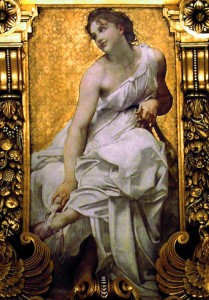 There are divine dances: in the first place, that of the Gods; in the second place, that of divine souls: in the third place, the revolution of the celestial divinities, viz. of the seven planets, and the inerratic sphere, is called a dance: in the fourth place, those who are initiated in the mysteries perform a certain dance: and, in the last place, the whole life of a philosopher is a dance. Terpsichore, therefore, is the inspective guardian of all dancing. Who then are those that honour the goddess in the dance? Not those who dance well, but those who live well through the whole of the present existence, elegantly arranging their life, and dancing in symphony with the universe. Hermeas on the Phaedrus. There are divine dances: in the first place, that of the Gods; in the second place, that of divine souls: in the third place, the revolution of the celestial divinities, viz. of the seven planets, and the inerratic sphere, is called a dance: in the fourth place, those who are initiated in the mysteries perform a certain dance: and, in the last place, the whole life of a philosopher is a dance. Terpsichore, therefore, is the inspective guardian of all dancing. Who then are those that honour the goddess in the dance? Not those who dance well, but those who live well through the whole of the present existence, elegantly arranging their life, and dancing in symphony with the universe. Hermeas on the Phaedrus.
|
|
|
|
This is the work of Memory, when you are about to die
down to the well-built house of Hades. There is a spring at the right side,
and standing by it a white cypress.
Descending to it, the souls of the dead refresh themselves.
Do not even go near this spring!
Ahead you will find from the Lake of Memory,
cold water pouring forth; there are guards before it.
They will ask you, with astute wisdom,
what you are seeking in the darkness of murky Hades.
Say, “I am a son of Earth and starry Sky,
I am parched with thirst and am dying but quickly grant me
cold water from the Lake of Memory to drink.”
And they will announce to you the Chthonian King,
and they will grant you to drink from the Lake of Memory,
And you, too, having drunk, will go along the sacred road on which other
glorio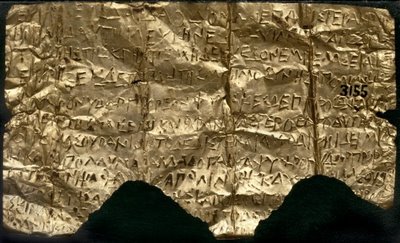 us initiates and bacchoi travel. us initiates and bacchoi travel.
Inscribed on an Orphic Gold tablet, (trans. Graf/Johnston), found in a grave in Perelia, southern Italy.
|
|
|
|
“Plato treads every where in the steps of Homer while he is searching out all the sources of sublimity in style, to maintain throughout his writings the dignity of true philosophy, and, at the same time, to preserve its simplicity, and unadulterated beauty.” (Floyer Sydenham, note to the First Alcibiades, Works of Plato I)
|
|
|
|
To what shall I compare 
The spectacles of a philosopher?
To a clear dream by Jupiter,
Circularly borne along in all directions;
In which, indeed, the body does not move,
But the soul travels round the whole earth,
From earth ascends to heaven,
Passes over every sea,
Flies through every region of the air,
Runs in conjunction with the sun,
Revolves with the moon,
Is carried round with the choir of the other stars,
And nearly governs and arranges the universe,
In conjunction with Jupiter!
O blessed journey, beautiful visions,
And true dreams!
Maximus of Tyre, Dissertation VI
|
|
|
|
|
|
We shall never be able to tell of virtue's brightness, unless by looking inward we perceive the fair countenance of justice and temperance, and are convinced that neither the evening nor morning-star, are half so beautiful and bright. But it is requisite to perceive objects of this kind with that eye by which the soul beholds such real beauties. Plotinus, Ennead I, VI, 4
|
|
|
|
He who in the present state
Vanquishes as much as possible
A corporeal life, through the exercise of
The cathartic virtues,
Passes in reality into
The fortunate islands of the soul,
And lives surrounded with
The bright splendours of truth
And wisdom proceeding from
The sun of good. Thomas Taylor, Essay on the Eleusian and Bacchic Mysteries

|
|
|
|
It is difficult to become good, for the Gods have placed sweat before virtue. But he who has arrived at the summit will find that to be easy, which it was difficult to acquire.” Hesiod, Works and Days 287-92
|
|
|
|
Hymn to Apollo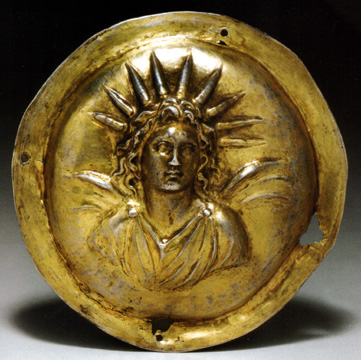
I am the eye with which the Universe
Beholds itself, and knows it is divine;
All harmony of instrument or verse,
All prophecy, all medicine, is mine,
All light of art or nature; - to my song
Victory and praise in its own right belong.
Shelly
|
|
|
|
|
|
What force, what sudden impulse thus can make
The laurel-branch, and all the temple shake!
Depart ye souls profane; hence, hence! O fly
Far from this holy place! Apollo's nigh.
Prepare your minds, and wash the spots away,
That hinder men to view th' all-piercing ray,
And lo! the pow'r, just op'ning on the sight,
Diffuses bliss, and shines with heav'nly light.
Beyond the day, beyond the night prolong
The sacred theme, to charm the God of song.
Let all resound his praise; behold how bright
Apollo shines in robes of golden light.
Callimachus
|
|
|
|
|
O beloved Pan, and all ye other Gods,
Who are residents of this place,
Grant that I may become beautiful within,
And that whatever I possess externally
May be friendly to my inward attainments!
Grant, also, that I may consider
The wise man as one who abounds in wealth;
And that I may enjoy that portion of gold,
Which no other than a prudent man
Is able either to bear, or properly manage!
Socrates, The Phaedrus 279c
|
|
|
|
|
|
There is nothing which approaches to a kindred alliance with the Gods, though in the smallest degree, to which the Gods are not immediately present and united.
Iamblichus - On the Mysteries, I, xv.
|
|
|
|
The Platonic are the only writings to which I can return, in health or in sickness, without satiety, fatigue, or dissatisfaction. It matters not how often I open these golden books, I find thoughts and ideas which lift me above the sordid and material cares of life, and which are a perennial consolation and a refuge. These ideas are primarily in the noumenal world, and our apprehension and participation of them here, in the region of time and space, is a foretaste of a perfect participation hereafter, if we qualify ourselves for such an exalted intellectual experience.
Thomas Moore Johnson - from his Introduction to Proclus’ Metaphysical Elements
|
|
|
|
 |
|
|
|
Philosophy may be compared to a luminous pyramid, terminating in Deity, and having for its basis the rational soul of man and its spontaneous unperverted conceptions, - of this philosophy, august, magnificent, and divine, Plato may be justly called the primary leader and hierophant, through whom, like the mystic light in the inmost recesses of some sacred temple, it first shone forth with occult and venerable splendour.
Thomas Taylor - General Introduction to the Works of Plato.
|
|
|
|
|
|
Error sinks into the abyss of forgetfulness, Truth alone swims over the vast extent of ages.
Thomas Taylor – Introduction to A New Method of Geometry
|
|
|
|
|
Divine number proceeds from the occult profundities of the undecaying monad, till it arrives at the divine tetrad, which produced the mother of all things, the universal recipient, ancient, and venerable, placing a boundary about all things, immutable, and unwearied, and which both the immortal Gods, and earth-born men, denominate the sacred decad.
Syrianus, Commentary on Arisotles’ Metaphysics 106.4
An innate knowledge of the Gods is coexistent with our very essence; and this knowledge is superior to all judgment and deliberate choice, and subsists prior to reason and demonstration. It is also co-united from the beginning with its proper cause, and is consubsistent with the essential tendency of the soul to The Good. If, indeed, it be requisite to speak the truth, the contact with divinity is not knowledge. For knowledge is in a certain respect separated [from its object] by otherness. But prior to the knowledge, which as one thing knows another, is the uniform connexion with divinity, and which is suspended from the Gods, is spontaneous and inseparable from them.
Iamblichus, On the Mysteries, I, iii.
|
|
|
|
 If Nature were to speak . . . If Nature were to speak . . .
“Whatever is produced is my spectacle, produced while I am silent, a spectacle naturally produced; and that I, who spring from a certain contemplation of this kind, possess a nature desirous of beholding: hence that which retains in me the office of a speculative power, produces a spectacle or theorem, in the same manner as the geometrician, from speculating on his science, describes a variety of figures, yet the lines of bodies emanate from hence, not by my engraving them in matter, but drop, as it were, from the energy of my contemplation.”
Plotinus, Ennead III, vii, 4
|
|
|
|
 Placing intellect in soul and soul in body, the Demiurgus fabricated the universe; that thus it might be a work naturally the most beautiful and the best. In this manner, therefore, according to an assimilative reason, it is necessary to call the world an animal, endued with intellect, and generated through the providence of Divinity. Placing intellect in soul and soul in body, the Demiurgus fabricated the universe; that thus it might be a work naturally the most beautiful and the best. In this manner, therefore, according to an assimilative reason, it is necessary to call the world an animal, endued with intellect, and generated through the providence of Divinity.
Timaeus, 30b
|
|
|
|
|
|
“. . . incorporeal natures are not separated from each other by bodies. Hence, one is not distant from the other by place, but by otherness and difference. When, therefore, difference is not present, then the natures which are not different are present with each other. The principle of all things, therefore, not having any difference, is always present; but we are present with it when we have no difference. And it indeed does not aspire after us, in order that it may be conversant with us; but we aspire after it, in order that we may revolve about it. We indeed perpetually revolve about it, but we do not always behold it. As a choral dance, however, though it moves about its leader, may be diverted to the survey of something foreign to the choir [and thus become discordant], but when it converts itself to him, sings well, and truly subsists about him; - thus also we perpetually revolve about the principle of all things, even when we are perfectly loosened from it, and have no longer a knowledge of it. Nor do we always look to it; but when we behold it, then we obtain the end of our wishes, and rest [from our search after felicity]. Then also we are no longer discordant, but form a truly divine dance about it.”
Plotinus, Ennead VI, ix, 8
|
|
|
|
|
“ . . . all things are suspended from the Gods. And different natures are illuminated by different Gods; every divine series extending as far as to the last of things. And some things indeed are suspended from the Gods immediately, but others through a greater or less number of media. But all things are full of the Gods. And whatever any thing naturally possesses, it derives from the Gods”.
Proclus, Elements of Theology, proposition 145
|
|
|
|
|
|
|
|
|
|
|
|
|
|
|
|
|
|
|
|
|
|
“It is better to say that faith every where imparts that which results from necessary conclusions. And that especially in the discussions of divine concerns, the vital sympathy arising from faith after demonstration, not only produces stability of real knowledge, but also union with the objects of knowledge, which is the end of human blessedness. For anagogic love precedes, exciting in the soul the desire of divine beauty; the true unfolding of it into light by those who are worthy to receive it follows; and faith succeeds in the last place, imparting a firm establishment in, and union with the divine object itself.”
Simplicius, Commentary on De Caelo 3,24 (TTS Works of Aristotle VII, p. 108)
|
|
|
|

|
|
|
|
“Now among the first principles of reality, the Good transcends beauty and the beautiful lies superior to justice. The first is established in inaccessible heights above the intelligibles, whereas the second is situated secretly among the first intelligibles and more evidently is at the lower limit of that order [in animal itself, or Phanes]: the third appears unitarily in the most primary rank of intellectual beings, and assumes secondary manifestations at the end of the intellectual procession of the Gods. Again the Good is on the level of the Gods, the beautiful on the level of intellect, the just on the level of souls.”
Proclus, Commentary on the Alcibiades, 320
“So where the just is, there also is the beautiful, and where the beautiful, there also is the good, whether you want to consider the most primary principles, or their irradiations as far as the lowest levels. All things enjoy the good (since it is the principle of all things), but only those things enjoy the beautiful which partake of form, only those things enjoy the just which partake of soul. But at least in the midmost centre of all beings, such as the soul is, all these are united to one another, the good, the beautiful, the just . . .”
Proclus, Commentary on the Alcibiades, 321
|
|
|
|
Zeus to Night: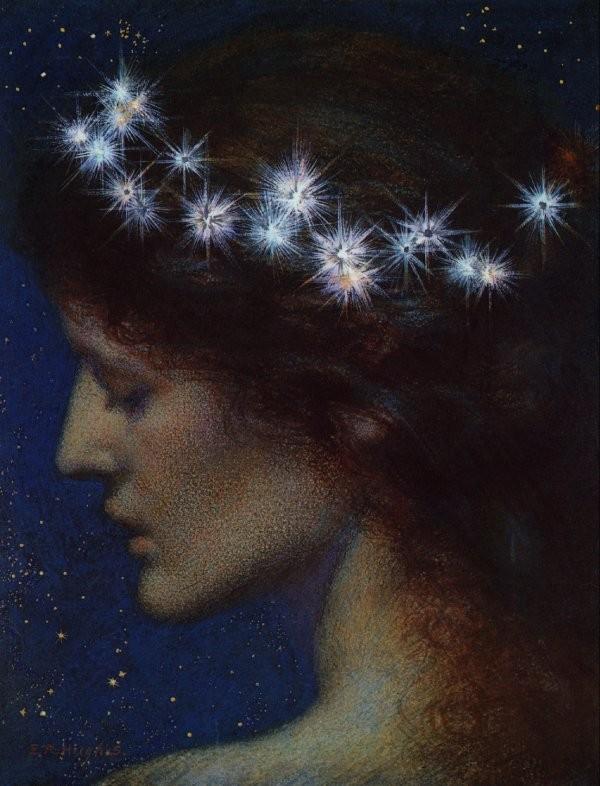
How shall all things be one, yet each distinct?
Night replies to Zeus:
Catch all in infinite aither round about,
therein the sky, the boundless earth, the sea,
and therein all the encircling signs of heaven.
When you have strung a firm bond round them all,
to the aither fasten then a gold chain.
The Orphic Rhapsodic Theogony, 165-6
|
|
|
|
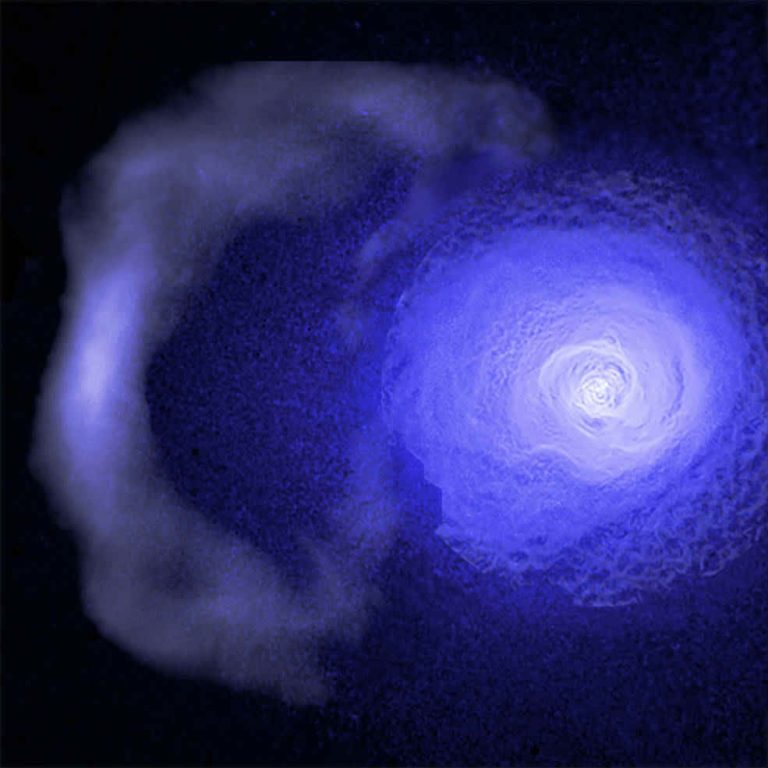
“. . . we are not terrestrial plants, but blossoms of heaven.”
Timaeus, 90a
Section from Perseus galaxy cluster from NASA’s
Chandra X-ray Observatory
|
|
|
|
“For as if someone standing on the margin of a river, should behold the image and form of himself in the floating stream, he indeed will preserve his face unchanged; but the stream being all-variously moved, will change the image, so that at different times it will appear to him different, oblique, and erect, and perhaps fragmented and continuous. Let us suppose too, that such a one, through being unaccustomed to the spectacle, should think that it was himself that suffered this distortion, in consequence of surveying his reflection in the water, and thus thinking, should be afflicted and disturbed, astonished and shocked. After the same manner, the soul, beholding the image of herself in body, borne along in the river of generation, and variously disposed at different times through inward passions and external impulses, is indeed herself impassive, but thinks that she suffers; and being ignorant of, and mistaking her image for, herself, is disturbed, astonished, and perplexed.”
Proclus, Commentary on the Timaeus, III, 330.
|
|
|
|
It is the part of an uneducated person to blame others where he himself fares ill; to blame himself is the part of one whose education has begun; to blame neither another nor his own self is the part of one whose education is already complete.
The Encheiridion Of Epictetus, 6
|
|
|
|
 |
|
|
|
|
Humankind, are not to be made any more truly knowing than happy by another's understanding. - There is no man can at once convey light in the higher subjects, to another man's understanding. It must come into the mind from its own motions, within itself: and the grand art of philosophy, is to set the mind a-going; and, even when we think nothing of it, to assist it in its labour.
Petvin, Letters on Mind
|
|
|
|
But it is also necessary for the soul, after becoming an intellective cosmos and assimilating itself to the extent possible to the entirety of the intelligible cosmos, to make its approach to the Maker of the universe, and from this approach to become familiar with him somehow through its continual concentration – for untiring activity focused on an object summons forth and kindles the rational principles we have in us – and through this familiarity to stand at the gate of the Father and be unified with him. This is the discovery, to encounter him, to be unified, to be together as the soul alone with him alone, to obtain this self-manifestation, to snatch itself from all other activity and focus on him, when it will think that even scientific arguments are stories, as it is together with the Father and feasts with him on the truth of Being and 'in a pure light it is purely initiated in perfect and unwavering visions'. The act of discovering is something like this, not a discovery involving the faculty of opinion, for that is ambivalent and no further advanced than irrational life. It is also not scientific, for that is syllogistic and composite, and does not attain the intellective essence of the intellective Demiurge. Rather it occurs in virtue of the intuitive act of concentrated vision, the direct contact with the Intelligible and the unification with the demiurgic Intellect.
Proclus, Commentary on the Timeaus 1, 301-2
|
|
|
|
|
|
|