Other Books from the Prometheus Trust
For volumes in the Thomas Taylor Series click here
For volumes in the Platonic Texts and Translations Series click here
For anthologies from the ISNS click here
For the “Music of Philosophy” series - click here

Plotinus or the Glory of Ancient Philosophy, Joseph Moreau 

The Philosophy of Proclus, L J Rosan 
The Seven Myths of the Soul, T Addey 
Philosophy as a Rite of Rebirth - From Ancient Egypt to Neoplatonism, A Uzdavinys 
The Collected Works of Thomas Moore Johnson - The Great American Platonist
Platonism and the World Crisis - John M Dillon, Brendan O’Byrne, Tim Addey 
Selections from the Prometheus Trust Conferences 2006-2010 
Plato Speaks: selected passages from the Republic - Andrew Domanski 
Discovering the Beauty of Wisdom - Mindy Mandell 
Release Thyself - Three Philosophic Dialogues, Guy Wyndham-Jones 
A Flight of Souls - Invocations and Songs - Edited by Guy Wyndham-Jones
Song of the Solipsistic One, Deepa Majumdar
PROMETHEUS TRUST STUDENTS’EDITION SERIES
Know Thyself, Plato’s First Alcibiades, translated F Sydenham and T Taylor 
Beyond the Shadows - The Metaphysics of the Platonic Tradition,
T Addey & Guy Wyndham-Jones 
The Unfolding Wings - The Way of Perfection in the Platonic Tradition, T Addey 
Plato’s Symposium, translated F Sydenham and T Taylor 
The Meno, Plato, translated by F Sydenham and T Taylor 
The Sophist, Plato, translated by T Taylor
|
The Philosophy of Proclus, the Final Phase of Ancient Thought
Laurence J Rosan
Laurence Jay Rosan's The Philosophy of Proclus, subtitled The Final Phase of Ancient Thought, has long been considered one of the finest overviews of late Platonic teaching: first published in 1949 it helped bring about a re-evaluation of Proclus and his work by modern scholars. Its clear and sympathetic approach to its subject allows the reader to follow, in the words of Rosan, "one of the most fascinating dialectics the human mind has conceived."
The philosophy of Proclus, built as it was on over a thousand years of vigorous development by a series of profound philosophers and theologians, represents the last age in the West in which the highest human endeavours in philosophy, religion, science and art, were still united and integrated. In Proclus we find philosophy as inner discipline - as a path to enlightenment - and his writings represent a fruition of a tradition which can be traced back though Iamblichus, Plotinus, Aristotle, Plato, Parmenides, Pythagoras, Homer, and, ultimately to its most ancient stirrings in Egypt. Proclus draws from ancient mystery celebrations, mythological dramas, inspired oracles, as well as from the truly scientific philosophy of Plato, in order to present to the meditative student a system at once full of truth and profoundly beautiful. To this comprehensive philosophy Rosan displays no small skill in finding a way to provide his readers with a framework for its initial consideration.
Laurence Jay Rosan was an Instructor of Philosophy at Pennsylvania State College. The work formed the basis of his award of a Doctorate from the department of Philosophy at Columbia University.
This new edition benefits from a revised bibliography kindly provided by Christoph Helmig and Sabrina Lange of Humboldt-Universitat Berlin.
308pp Hardback £21.00 ISBN 978-1898910-442
Buying from the EU - please go here. Please ensure you have selected the appropriate postage/discount from the button’s accompanying drop down menu. Note: we are unable to supply to the US and Canada - please see the ordering page for a link to our North America distributor.

The Seven Myths of the Soul
Tim Addey
For more than one thousand years, the Pythagorean and Platonic philosophers of antiquity visited and revisited their primeval mythological heritage which was the living heart of their pagan religion, art and science. In earliest antiquity the inner truths of myth were held to be suitable only for those who had undergone the initiations and training of mystery cults and academies of philosophy, and were communicated in secret and guarded language; in later antiquity, circumstances forced their interpreters to become more open and commit their insights to writing. It is these writings upon which Tim Addey draws in order to present to the non-specialist reader a philosophic interpretation of the beautiful and powerful myths of the Greeks
The Seven Myths of the Soul is based on a passage from Damascius, the last head of Plato's Academy in Athens: 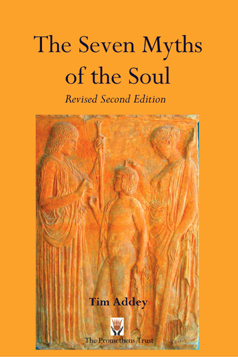
The Soul descends into generation, after the manner of Kore;
She is scattered by generation, after the manner of Dionysus ;
Like Prometheus and the Titans, she is bound to body.
She frees herself by exercising the strength of Heracles ;
Gathers herself together through the help of Apollo
And the Saviour Athene, by truly purifying philosophy;
And she elevates herself to the causes of her being with Demeter .
In the stories of Persephone (Kore), Dionysus, Prometheus, Heracles, Apollo, Athene and Demeter the trials, initiations and ultimate triumph of each human soul are outlined in mystical symbols. For those seeking soul wisdom this book provides the starting point for a cycle of profound meditations.
This paperback edition includes eight colour plates illustrating the various myths and many diagrams outlining the basic relationship between the various conditions through which the soul passes.
Chapter headings are: 1 An outline of Platonic philosophy 2 The journey of the Soul 3 Persephone 4 Dionysus 5 Prometheus 6 Heracles 7 Athene 8 Apollo 9 Demeter (ch.3-9 are subdivided into The Myth and Interpretation) 10 Some Conclusions 11 Plato's Symposium and Myth 12 A defence of the worship of the Gods
240 pp, - revised edition £12.00 ISBN 978-1898910732
Buying from the EU - please go here. Please ensure you have selected the appropriate postage/discount from the button’s accompanying drop down menu. Note: we are unable to supply to the US and Canada - please see the ordering page for a link to our North America distributor.
Philosophy as a Rite of Rebirth:
From Ancient Egypt to Neoplatonism
Algis Uzdavinys
Philosophy as a Rite of Rebirth challenges our understanding of philosophy - indeed it challenges many centuries of assumptions which have reduced othodox philosophy to a shadow o f its original. Algis Uzdavinys returns to the very roots of philosophy in Ancient Egypt, and shows why the Greeks revered that land of pyramids and priest-kings as the source of divine wisdom. Bringing his understanding of many great traditions of philosophy - Indian, Islamic, Greek, and others - he presents the case for considering philosophy as a human participation in a theophany, or divine drama
Casting aside the unnatural limitations of modern philosophy, as well as the grave misunderstandings of Egyptologists, radical and exciting possibilities emerge for the serious philosopher. These possibilities will certainly change our view of the universe in general, but most particularly our view of ourselves. The Rebirth of the title is one that implies an expansion of consciousness both upwards towards the divine heights of reality, and outwards to embrace the whole of creation as a living image of the gods. The exercises of philosophy thus move from the rational to the intuitive, onward to pure contemplation and, ultimately, to a god-like energy in the divine drama.
Dr Uzdavinys has recently been a research fellow at at La Trobe University in Bendigo, Australia and an associate professor at the Vilnius Academy of Fine Arts (Kaunas Department). He is a published author in English, French and Lithuanian and translator into Russian and Lithuanian.
368pp Hardback £24 ISBN 978-1-898910-35-0
Buying from the EU - please go here. Please ensure you have selected the appropriate postage/discount from the button’s accompanying drop down menu. Note: we are unable to supply to the US and Canada - please see the ordering page for a link to our North America distributor.
The Collected Works of Thomas Moore Johnson
The Great American Platonist
With a Preface by Jay Bregman
Thomas Moore Johnson (1851-1919) can rightly be said to be a great American Platonist: he was one of a number of men and women of that period who sought to promulgate the philosophy of the Platonic tradition as a spiritual and intellectual discipline. Had not the tide of rationalist and sceptical thinking run so strongly in the last one hundred years, Johnson – along with his fellow philosophers such as Hiram K Jones, William Torrey Harris and Bronson Alcott – would today be recognised as a great contributor to the cause of true philosophy in the modern west.
Johnson edited two journals, The Platonist and Bibliotheca Platonica, between 1880 and 1890, as well as publishing three books in the following years. This book presents much of Johnson's work during this time – translations of Iamblichus' Exhortation to Philosophy, Proclus' Elements of Metaphysics, many of his translations of the treatises of Plotinus (including three which had never before been translated into English), as well as several smaller translations of important Platonic fragments and many of his original writings.
Contents:
Iamblichus’ Exhortation to Philosophy (or Protrepticus), 
Proclus' Elements of Theology (or Metaphysics)
Fragments from the Epistles of Iamblichus
Fragments of Ammonias Saccas
Proclus on the Chaldean Oracles
Two Hymns of Synesius
Six treatises from Plotinus' Enneads:-
On the Nature of Living Itself & on the Nature of Man I, i
On the Essence of the Soul (1) IV, i
On the Essence of the Soul (2) IV, ii
On the Descent into Body IV, viii
Intelligibles not external to Mind, and on the Good V, v
Diverse Cogitations III, ix
Original Writings:-
Plato's Basic Concepts
Plato and his Writings
The Platonic Theory of Education
Plato and his Philosophy
Three Fundamental Ideas of the Human Mind
432pp Hardback £18 ISBN: 978-1898910-824
Buying from the EU - please go here. Please ensure you have selected the appropriate postage/discount from the button’s accompanying drop down menu. Note: we are unable to supply to the US and Canada - please see the ordering page for a link to our North America distributor.
Platonism and the World Crisis
John M Dillon
with accompanying essays from Brendan O’Byrne & Tim Addey
Humanity faces a number of pressing problems – ecological, religious and political. In 2006, as the inaugural lecture of a continuing series at the Dublin Centre for the Study of the Platonic Tradition given under the general title of ‘Platonism and the World Crisis’, John M Dillon put forward a number of bold and radical solutions to these problems, drawn from the Platonic tradition. This book pr esents an essay based on that lecture, together with two further essays – The Urgency of Platonism: the Philosophical Background to the World Crisis by Brendan O’Byrne, and Towards a Philosophic Democracy by Tim Addey. Together the three essays question the assumptions and goals of modernism, offering the reader intelligent alternatives to the seemingly unstoppable march of humanity towards the destruction of itself and its environment.
In a world in which an increasing number of thinkers are urgently looking for new solutions to emerging problems, here is evidence that the best answers have been waiting quietly for at least two and a half thousand years – waiting for us to notice the continuing relevance of the profound wisdom of the Platonic tradition.
80pp Paperback £6 ISBN: 978-1898910-558
Buying from the EU - please go here. Please ensure you have selected the appropriate postage/discount from the button’s accompanying drop down menu. Note: we are unable to supply to the US and Canada - please see the ordering page for a link to our North America distributor.
Towards the Noosphere
Futures Singular and Plural
John M Dillon
Stephen R L Clark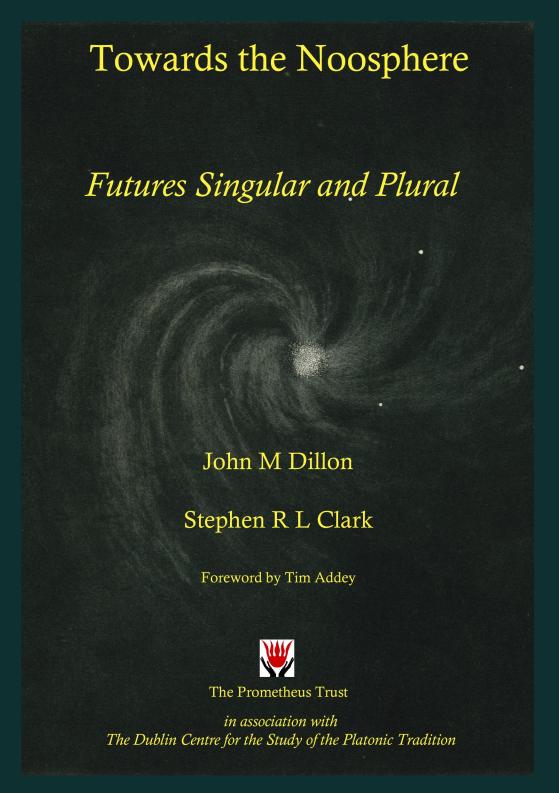
This paperback continues the explorations begun in the Prometheus Trust's small paperback Platonism and the World Crisis. The two essays contained in this new book address the broad question, "What is to be done?" In the first, Towards the Noosphere, Professor John M Dillon explores the writings of Plotinus, Origen, and Teilhard de Chardin in order to consider the nature of the universe in which we live - and from their insights to consider the goals towards which we strive. In the second, Futures Singular and Plural, Professor Stephen R L Clark examines further speculations upon these matters from more recent theorists writing in disciplines of philosophy, science and science fiction.
80pp Paperback £6 ISBN: 978-1898910-602
Buying from the EU - please go here. Please ensure you have selected the appropriate postage/discount from the button’s accompanying drop down menu. Note: we are unable to supply to the US and Canada - please see the ordering page for a link to our North America distributor.
Selections
From the Prometheus Trust Conference 2006-2010
Edited by Linda H Woodward
It is a delight to present to the reading public a selection of 14 papers presented at the first five annual conferences of the Prometheus Trust: in making our selection we have attempted to reflect the nature of these conferences which bring together academic specialists, academics stepping outside their specialism, and non-academics. The contributors are, we hope, drawn by a common love of wisdom so that each is willing to cross those mental boundaries which habit so often allows – almost unnoticed – to circumscribe our understanding, and each is willing to share the insights of their own pursuit of truth in whatever fields and down whatever paths they have chosen.
Contents:
Are you a Platonist? John H. Spencer
Speaking the vision Martha Lyn
Autonomy and the justification of philosophy Mark Piper
Pagan polytheism, the theoi meilichioi and the theoi maimaktikoi in Graeco-Roman mysteries Isha Gamlath
Suhrawardi and Plotinus on self-knowledge as illumination Samir Mahmoud
Plato, a Deleuzian: On the indiscernibility of the philosopher in Plato’s Sophist Julia Sushytska
The luminous pyramid Tim Addey
How curiosity killed the existentialist Mindy Mandell
Five steps to death: Reflections on Plato’s Phaedo Jeremy Best
Friction and fire Leonard George
Between psychical and physical death Noel Boulting
Plotinus on nature: a new view through an ancient lens Ann Van Ryn
‘Only a God can save us’: Crisis and resolution Alan Cardew
The ancient Greek temperament and the interpretatio graeca: Reflections on a facet of classical paideia Michael Griffin
224pp Paperback £12 ISBN: 978-1898910-664
Buying from the EU - please go here. Please ensure you have selected the appropriate postage/discount from the button’s accompanying drop down menu. Note: we are unable to supply to the US and Canada - please see the ordering page for a link to our North America distributor.
Plato Speaks
Selected passages from Plato’s Republic with facing commentary
Andrew Domanski
Plato has justly been called the Teacher of the West. This book is intended for the reader who would like to engage with the words of Plato at a level which does not require the unaided reading of an entire dialogue. On every left-hand page, the reader will find, in translation, a passage from Plato's most famous dialogue,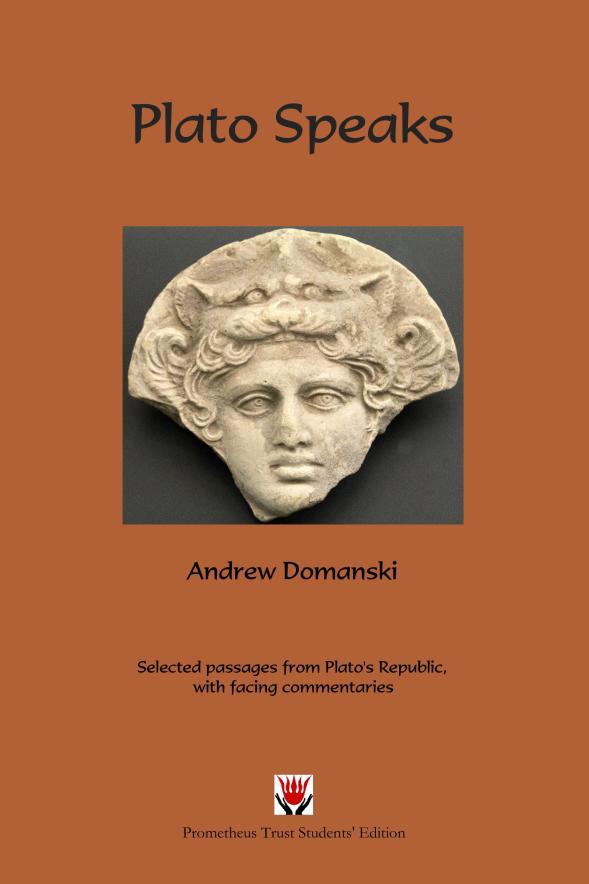 the Republic, and on the facing right-hand page, a commentary on that passage. The commentaries attempt to draw out Plato's meaning for the benefit of those readers who require elucidation of the texts. Thus the book need not be read from cover to cover: the reader may well be content to open it at any one place, and close it again after having read only a single passage of text with, if necessary, the accompanying commentary. The book is not 'Plato made easy', for that would be an injustice to Plato: rather, it seeks to show that the teaching of Plato is clear and accessible, if not always easy. The book will have succeeded in its principal aim if the reader feels encouraged to proceed to the reading of one or more entire dialogues of Plato.
256pp Paperback £9 ISBN: 978-1898910-718
Buying from the EU - please go here. Please ensure you have selected the appropriate postage/discount from the button’s accompanying drop down menu. Note: we are unable to supply to the US and Canada - please see the ordering page for a link to our North America distributor.
|
Discovering the Beauty of Wisdom
Mindy Mandell
What does it mean to follow Platonic philosophy as a spiritual path - to take the words of the ancient Platonists seriously and to explore them as a guide for the inner life?
This book tackles that question by presenting the philosophy of the Platonic tradition from a perspective that is informed by a personal commitment of many years' standing. The author writes, "Once I found Platonism, I never looked back. This is a tradition that is both deeply spiritual and also rigorous in its treatment of metaphysics. The language of pure metaphysics presents the study of the divine essence of Reality in terms that are not limited to any single religious tradition. The Platonists instead speak straight to the soul."
372 pp Paperback £12 ISBN 9781898910725
Buying from the EU - please go here. Please ensure you have selected the appropriate postage/discount from the button’s accompanying drop down menu. Note: we are unable to supply to the US and Canada - please see the ordering page for a link to our North America distributor.
Release Thyself
Three Philosophic Dialogues
Guy Wyndham-Jones
The Therapon * The Alphaeus * The Platon
Being a tribute to, and a celebration of, Socrates, Plato and the golden Platonic Tradition
This volume of dialogues in the Platonic style is an offering of thanks by the author to those great heroes of the Platonic tradition who have set before the human race living images of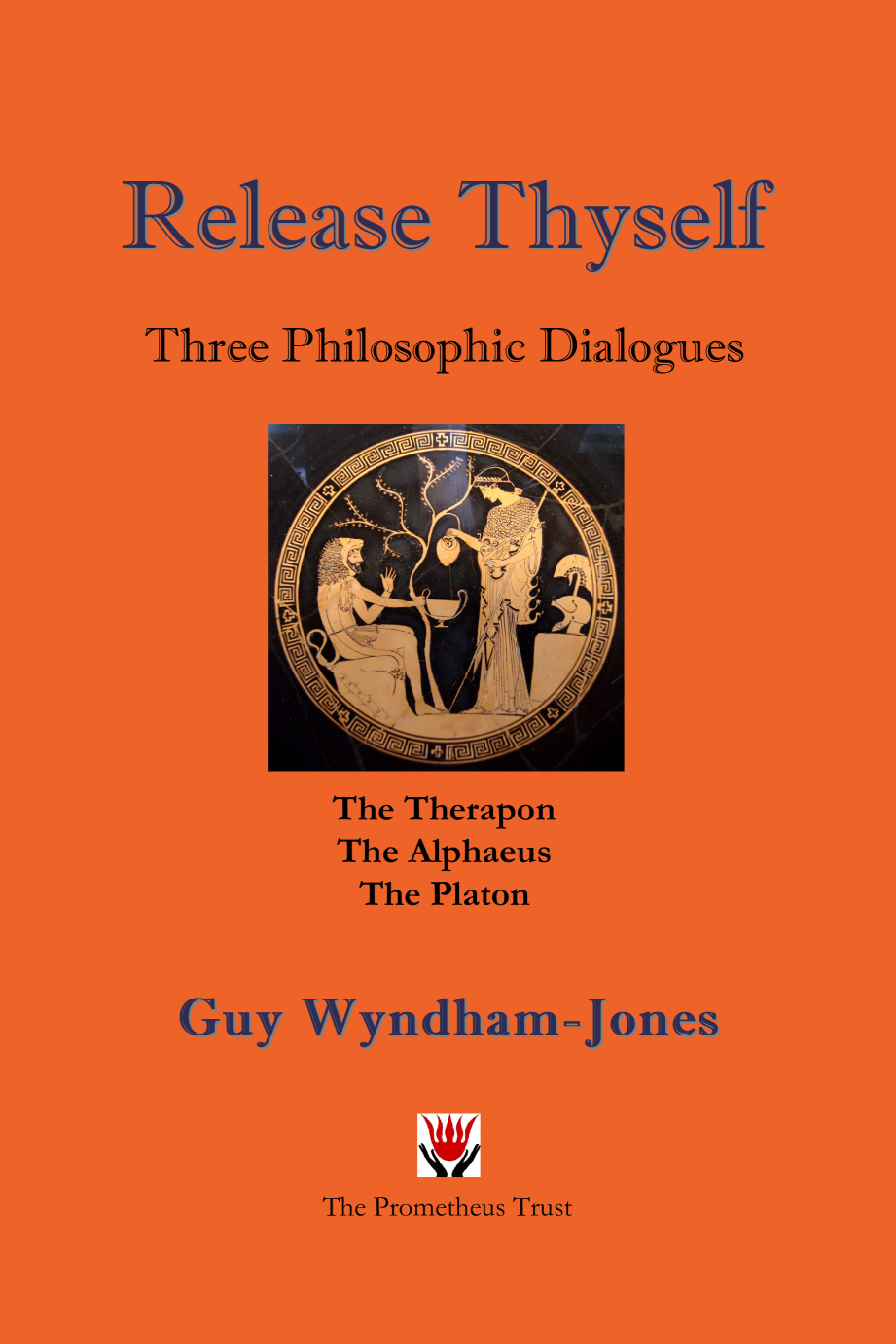 wisdom. The dialogues are centred around Socrates and Plato, and as the author writes, "I have merely attempted to imagine certain occasions that may or may not have happened, and certain subjects of conversation that may or may not have been examined and rigorously explored."
Three dialogues - The Therapon, The Alphaeus and The Platon - are written in the Platonic style. The Therapon is an imagined exchange of ideas between Socrates and his jailer during Socrates' last night on Earth: it is sub-titled On the Nature of Ideas. The Alphaeus starts with a wealthy and self-satisfied man attacking Socrates and his philosophical ways soon after he has been charged to appear before the court of Athens - but ends with dramatic changes: it is sub-titled Concerning Human Happiness. The Platon explores what might have passed between Socrates and Plato during their last meeting together: it is sub-titled On Soul.
The Platonic tradition is both old and young but the vital subjects to which it addresses itself are those of perpetual importance to rational beings such as ourselves – the nature of the human self, of the good life, of the great universe in which we find ourselves, and of its source. In these three new dialogues we find these subjects discussed in earnest: the self as the soul, the happiness we seek, and the divine ideas that underlie the manifested universe are all examined with a view to how the Platonic tradition might answer some of the viewpoints adopted by modern thinkers. Answers are offered but in such a way as to stimulate the reader’s own thoughts about these matters – and this is the key to the tradition: for unless questions are genuinely thought through by the reader, any answers suggested by the author are merely another set of opinions.
160 pp Paperback £10 ISBN 978-1898910-565
Buying from the EU - please go here.
Please ensure you have selected the appropriate postage/discount from the button’s accompanying drop down menu. Note: we are unable to supply to the US and Canada - please see the ordering page for a link to our North America distributor.
A Flight of Souls
Invocations and Songs
Edited by Guy Wyndham-Jones
The spontaneous urge to give thanks for goods received is natural to the human condition. All the pieces in this little book, drawn from the Platonic tradition of philosophy, are genuine expressions of such thanks; and of certainty, faith, truth, belief, need, experience and love. Aesthetics alone should be put aside when considering or using these invocations and songs, as they are regarding subjects which defy commonplace modes of expression.
The Platonic tradition is very much alive and Philosophy continues to sing through this tradition’s years and life, for the well-being and the good of all.
The intention of this book is to inspire . . .
A Common Hymn
Hail! may the blissful road of life be mine,
With ev'ry good replete of light divine:
And from my members dire disease expel,
That splendid-gifted health with me may dwell.
My soul insanely wand'ring on the earth,
Though intellectual regions gave her birth,
Attract to heav'n with vigour unconfined,
Through mysteries which rouse the dormant mind.
Your helping hands, all-bounteous powers, extend,
And paths divine unfold as I ascend.
Give me to see those beams of glorious light,
Which aid the soul from Generation's night,
Dark, dreary, dire, indignantly to fly,
And rapidly regain her native sky.
Extend your hands, and with your fav'ring gales,
While bound for home I raise th'impatient sails,
Impel my vessel o'er life's stormy main,
Till the fair port of Piety I gain;
For there my soul, with mighty toils oppressed,
Shall find her long-lost Paradise of rest.
160pp Hardback £14 ISBN 978-1-898910-69-5
Buying from the EU - please go here. Please ensure you have selected the appropriate postage/discount from the button’s accompanying drop down menu. Note: we are unable to supply to the US and Canada - please see the ordering page for a link to our North America distributor.
An Index to Plato
A Subject Index using Stephanus pagination
This subject index is an invaluable aid to the study of Plato's writings and will be of use both to those who are familiar with his works and those who are coming anew to them. The index refers to the Stephanus pagination so that it can be used with any translation that includes this standard numbering.
The main part of the index is a reproduction of the one that was compiled for the Jowett five volume work, The Dialogues of Plato, the third edition of which was published in 1891. A number of additional entries have been made to this, and a small index to the Epistles of Plato (I to XII) is also included.
192pp Hardback £11 ISBN: 978-1898910-343
Buying from the EU - please go here. Please ensure you have selected the appropriate postage/discount from the button’s accompanying drop down menu. Note: we are unable to supply to the US and Canada - please see the ordering page for a link to our North America distributor.
From My Reading to You rs
rs
This beautiful and inspirational book was put together by "PMHB" - a friend of the Prometheus Trust - after ninety years of thoughtful reading from a wide range of philosophical and devotional literature. Drawing from the universal tradition, its one hundred pages of profound quotes include several delicate line drawings from Jill Symonds.
100pp £6 ISBN 978-1898910-367
Buying from the EU - please go here.
Please ensure you have selected the appropriate postage/discount from the button’s accompanying drop down menu. Note: we are unable to supply to the US and Canada - please see the ordering page for a link to our North America distributor.
Song of the Solipsistic One
Poems by
Deepa Majumdar
This anthology consists of 70 poems, on philosophical topics such as the One, The Divine Name, Cosmic Union, Cosmology, Cosmic Illusion, Afterlife, Self, Imagination, Desires, Thoughts, Body, Love, Virtue, Beauty, Time, Eternity, History, Death.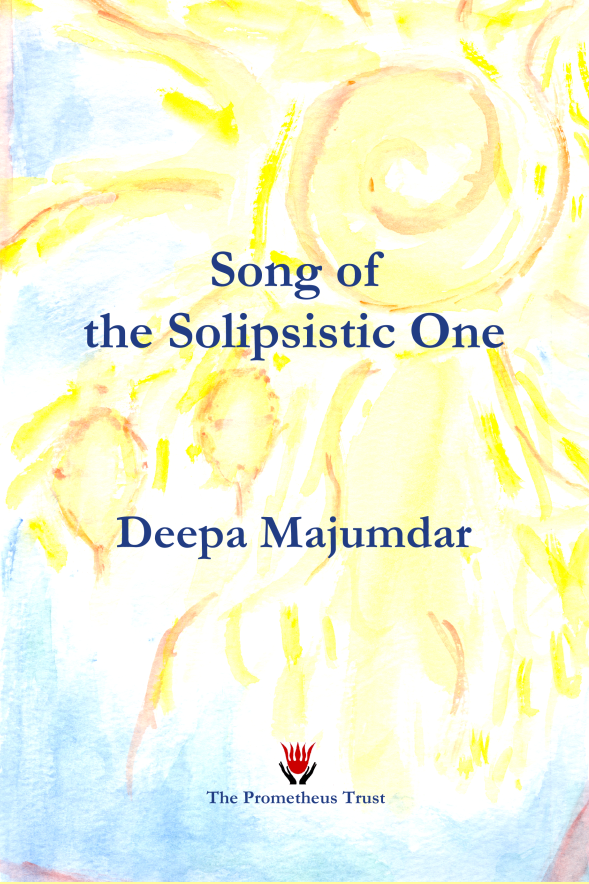
"My influences are many, but my inspiration remains the perennial, universal mystic vision of oneness. I admire greatly the depth of thought in the works of western thinkers like Plato, Plotinus, William Wordsworth, Emily Brontë and Bertrand Russell ... but my ultimate inspiration comes from the great sages and poet seers of the Indian tradition, whose highest trans-discursive experiences have shaped the basic vision of Advaita Vedanta. My work is rooted in a consistent existential- theological-metaphysical paradigm drawn from this Advaitic experience... This vision asserts that there is, in the end, only one Reality – namely God (Brahman). Inasmuch as this solitary Reality is the universal Self – a supreme object-free Subject – it becomes the solipsistic One. When this Reality enters human history ... that is, when the Infinite appears in the guise of the finite ... it comes in the form of the Divine Incarnation or Avatara.
In this work, I envision the Divine, poetically, as a magnificent Sun ... coiling round and round ... animated by the twin powers of contemplation and aspiration. Our human prayers and meditation rotate this flaming wheel. But the whirling Sun, in turn, attracts to itself thought lanterns from the human mind."
192pp Hardback £16 ISBN: 978-1898910-633
Buying from the EU - please go here. Please ensure you have selected the appropriate postage/discount from the button’s accompanying drop down menu. Note: we are unable to supply to the US and Canada - please see the ordering page for a link to our North America distributor.
Prometheus Trust
Students’ Editions
Know Thyself - Plato's First Alcibiades and Commentary
Translated by Floyer Sydenham and Thomas Taylor
The Prometheus Trust publishes a number of books under the general title of ‘Students’ Edition Series’ - these are designed to act as introductions to various aspects of Platonism. This is the first of the Series.
Plato's First Alcibiades was the recognised introduction to the dialogues of Plato in late antiquity, because it addresses the important question of the nature of the self. Only by discovering this can we understand the perspective from which we view the rest of reality. It was also considered as a necessary 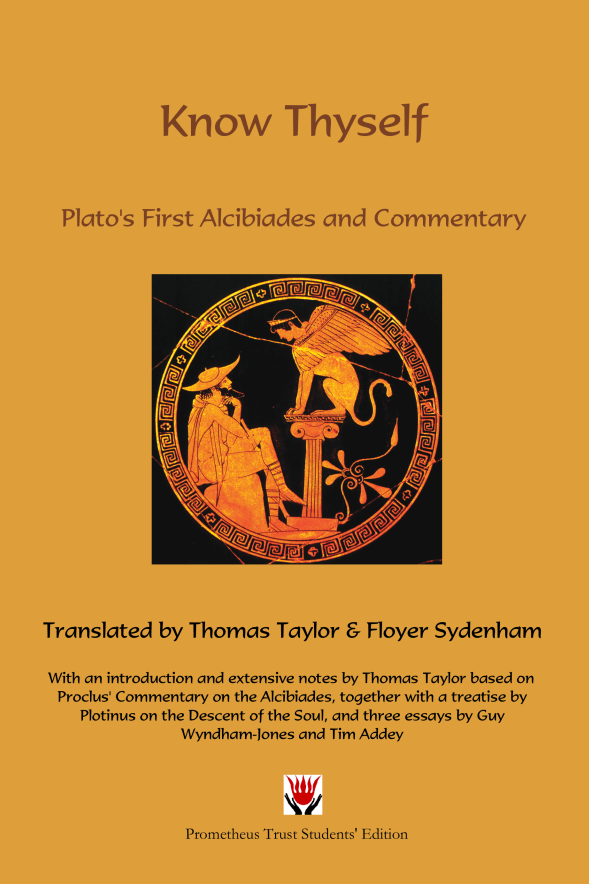 first step in our pursuit of happiness, for unless we know what we are we cannot know what will bring about our fulfilment - and without the fulfilment of our true nature we cannot be happy. As a key to human understanding and happiness, the dialogue is as important today as it was in antiquity. Approximate Stephanus pagination accompanies the text.
Added to this dialogue, in the form of additional notes and an introduction, is much of Proclus' Commentary written on the understanding that "it will be found by those who are deeply skilled in the philosophy of Plato, that each of his dialogues contains that which the universe contains." The Commentary reveals to the thoughtful student the depths of this important dialogue, its universal form, and its living heart - which is the quickening of the soul by the touch of divine vision.
In this second edition, published in 2011, the treatise by Plotinus, On the Descent of the Soul (En IV, viii) has been added.
Three modern essays, written with the newcomer in mind, accompany the text and commentary: A Survey of the Soul and Socrates as the Symbolic Daemon of the Alcibiades by Tim Addey, and Possibilities of Self by Guy Wyndham-Jones.
176pp Paperback £9.95 ISBN 978-1898910-961
Buying from the EU - please go here. Please ensure you have selected the appropriate postage/discount from the button’s accompanying drop down menu. Note: we are unable to supply to the US and Canada - please see the ordering page for a link to our North America distributor.
Beyond the Shadows
The Metaphysics of the Platonic Tradition
Tim Addey & Guy Wyndham-Jones
This volume presents an outline of the metaphysics of the Platonic traditio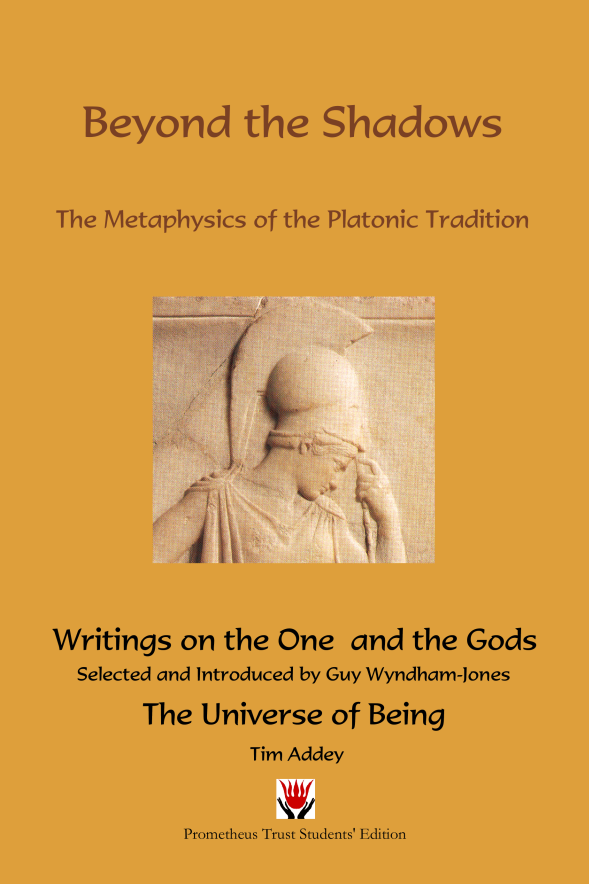 n which the authors hold as having its roots in the mythic writings of Homer and Hesiod, having been developed through the Pythagorean and Orphic schools, scientifically unfolded by Plato, and received its finest written flowering in late antiquity in the works of Plotinus, Iamblichus, Proclus and many others.
The book is divided into two sections: in the first, introduced by Guy Wyndham-Jones, extracts from the works of ancient philosophers concerning The One and the Gods unfold the divine summit of the Platonic metaphysics. This section especially demands more than ordinary study: each piece acts as a starting point for the deepest meditation, and calls upon the readers' deepest faculties.
The second section, by Tim Addey, aims to give the new student a framework from which to begin the serious study of the subject. It shows how the orthodox understanding of Plato, based on the division of reality into abstract form and material manifestation is inadequate for the proper understanding of the tradition. Instead a more subtle six-fold division of the universe is delineated as the way in which the divine sources of the universe unfold in progressive stages to the furthest extremity of things. It explains how the universe is understood in this tradition to be a single entity, which not only proceeds outwards in an ordered way, but also returns to its source in a similar manner. New edition published in 2011
192pp Paperback £9.95 ISBN 978-1898910-954
Buying from the EU - please go here. Please ensure you have selected the appropriate postage/discount from the button’s accompanying drop down menu. Note: we are unable to supply to the US and Canada - please see the ordering page for a link to our North America distributor.
The Unfolding Wings
The Way of Perfection in the Platonic Tradition
Tim Addey
The ancient philosophic tradition of Pythagoras, Plato, Plotinus, Proclus and many others was a living yoga of enlightenment. This book attempts to present to both the newcomer and th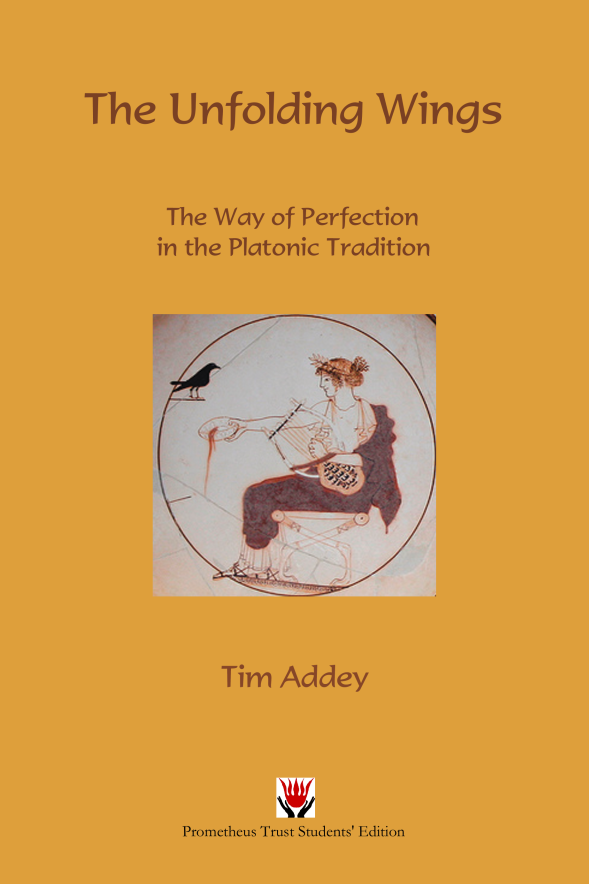 ose who have already studied aspects of the tradition the means for pursuing its truth and beauty as a way of perfection.
The author uses a wide range of extracts from the sages of true philosophy to illustrate the many aspects of the path: chapters on Dialectic Meditation, Contemplation, Theurgy, Initiation, the Guardian Daemon, Mythology, Virtue and Love demonstrate the richness hidden within this long-neglected yoga of the ancient west.
The book offers to the reader a starting point for a lifelong discipline which leads to the discovery within his or her own soul of the most profound wisdom, the broadest understanding of the self and the cosmos, the highest happiness, and, ultimately, a friendship with divinity. It does not, however, suggest any shortcuts - as Plato wrote in this Seventh Epistle: "For a thing of this kind cannot be expressed by words like other disciplines, but by long familiarity, and living in conjunction with the thing itself, a light as it were leaping from a fire will on a sudden be enkindled in the soul, and there itself nourish itself." The book is for those who are prepared to live the life, and for those who prize above all mere possessions the light enkindled in the soul. New edition published in 2011.
192pp Paperback £9.95 ISBN 978-1898910-947
Buying from the EU - please go here. Please ensure you have selected the appropriate postage/discount from the button’s accompanying drop down menu. Note: we are unable to supply to the US and Canada - please see the ordering page for a link to our North America distributor.
The Symposium of Plato
Translated by Floyer Sydenham and Thomas Taylor
Another Platonic dialogue presented in the Students’ Edition Series, this dialogue 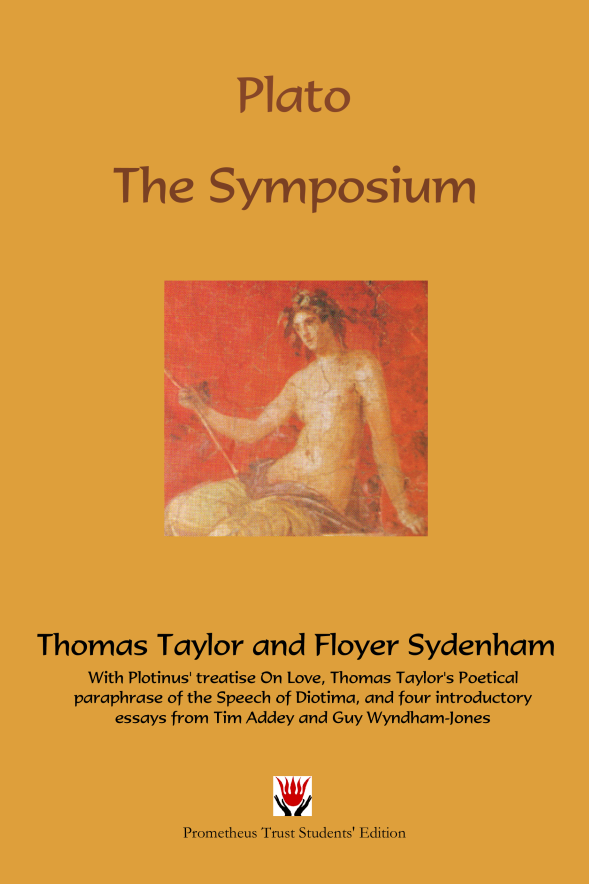 is one of the literary masterpieces of the world and a philosophic treatise which has few equals. In this translation by Floyer Sydenham and extensively revised by Thomas Taylor the profundities of Plato's mystical system are faithfully transmitted to the reader. The student will find a treasury of notes concerning the background to the dialogue as well as the mystical symbolism hidden within it. Approximate Stephanus line numbering accompanies the text.
No translator so deeply imbibed the spirit of Plato as did Thomas Taylor, and his beautiful Poetical Paraphrase of Diotima's Speech is included here. Plotinus' Ennead (III, 5) On Love, translated by Stephen Mackenna is included, as are four modern essays which it is hoped will throw further light upon this all important dialogue: Tim Addey contributes Diotima's Continuum of Love, Socrates the Lover and The Place of the Symposium in the Writings of Plato, while Guy Wyndham-Jones contributes The Beauty of Truth.
208pp Paperback £9.95 ISBN 978-1898910-978
Buying from the EU - please go here. Please ensure you have selected the appropriate postage/discount from the button’s accompanying drop down menu.Note: we are unable to supply to the US and Canada - please see the ordering page for a link to our North America distributor.
The Meno
Translated by Floyer Sydenham and Thomas Taylor
The Meno is one of the foundational dialogues of the Platonic tradition - it initiat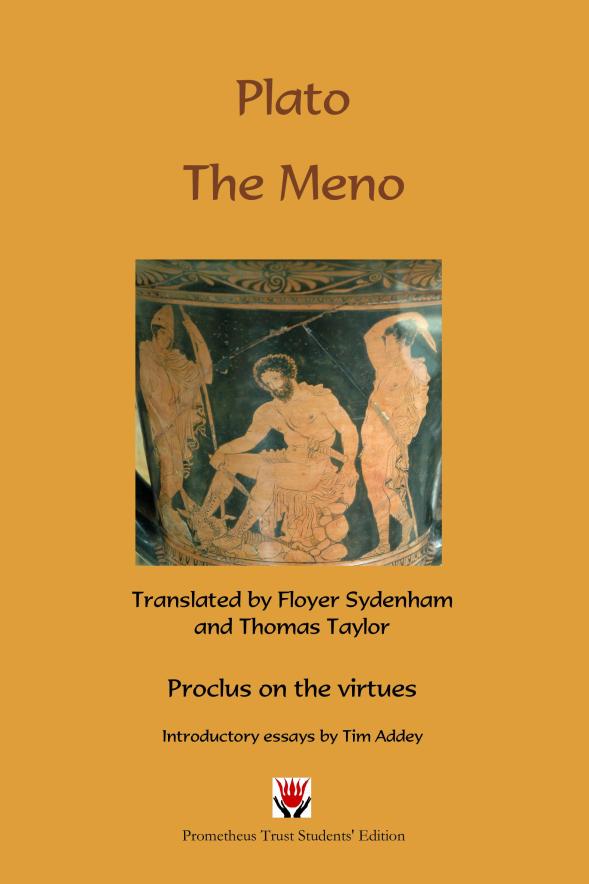 es a series of investigations into subjects which lie at the heart of philosophy: What is virtue? How is it acquired? How can we learn about the essence of things? Why should we strive after a rational knowledge rather than rely upon right opinions? And when we formulate answers to these questions, what do they tell us about our own nature?
In this edition of Floyer Sydenham's translation revised by Thomas Taylor for inclusion in his Works of Plato we have added an extract from Proclus' Commentary on the Republic on Virtue and three introductory essays by Tim Addey: An Overview of the Meno, On the Virtues, and On Reminisence - Remembering Immortality.
176pp Paperback £9.95 ISBN 978-1898910-923
Buying from the EU - please go here. Please ensure you have selected the appropriate postage/discount from the button’s accompanying drop down menu. Note: we are unable to supply to the US and Canada - please see the ordering page for a link to our North America distributor.
The Sophist - Plato
Translated by Thomas Taylor
In Plato’s time, as today, there were many who offered – for a price – clever theories and systems which purported to be deep insights into reality: the men who did so were known as ‘the wise’ – sophists. In the whirl of theorising which was especially the mark of classical Athens, it was easy to see Socrates, Plato’s teacher, as just another sophist. This dialogue examines more carefully this misconception, and asks important questions – how can false opinions exist? What is the nature of images? Can there be degrees of reality? What exactly do sophists do? What is the difference between ‘the wise’ and ‘those who love wisdom’ (in other words between clever sophists and truth-honouring philosophers)? Such questions are as relevant today as they were two and half thousand years ago.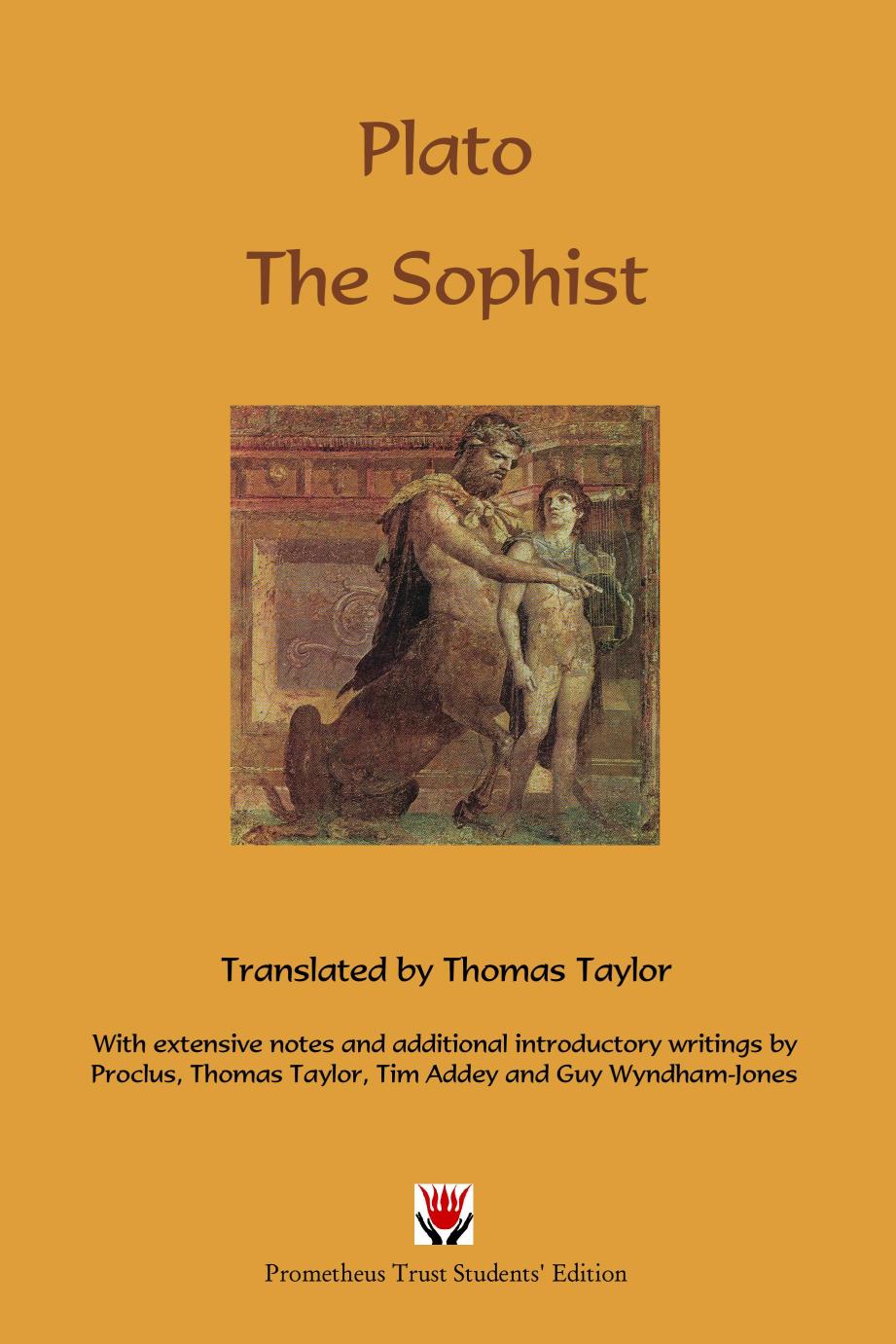
Plato’s Sophist is a dialogue which is key to the understanding of Platonic metaphysics and dialectics: its traditional subtitle is ‘On Being.’ Thomas Taylor's translation was first published in 1804 as part of his Works of Plato – the first ever complete translation of Plato into English.
This Students’ Edition volume has extensive notes to help those coming anew to the Sophist to grasp some of the important concepts which stand behind the dialogue. Also added is an extract from Proclus On Forms, Reasons and Dialectic (from his Commentary on the Parmenides); a dissertation, On Ideas, by Thomas Taylor; and two modern essays which the Trust hopes will further the understanding of the newcomer to Plato and his tradition.
176 pp Paperback £9.95 ISBN 978-1898910-930
Buying from the EU - please go here.Please ensure you have selected the appropriate postage/discount from the button’s accompanying drop down menu. Note: we are unable to supply to the US and Canada - please see the ordering page for a link to our North America distributor.
The Orphic Poems
M L West
Recent archaeological discoveries together with modern explorations of the continuing power of myth to convey profound insights into theological, human and cosmological matters have combined to encourage a significant growth in general and scholarly interest in Orphic texts. An important influence on Plato and the Platonic tradition, the Orphic myths speak of the mysteries of the unfolding universe and the journeyings of the soul within its coils.
Martin West's Orphic Poems, first published in 1983, continues to be 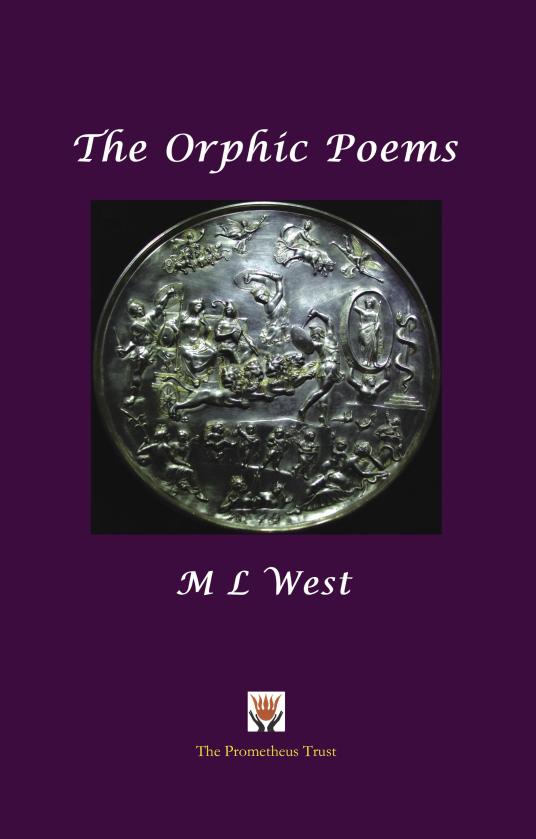 regarded as essential reading for those engaged in Orphic Studies. One reviewer summarized it with these words, "This literary history of Orphic poetry represents a pioneering achievement, and is unlikely to be bettered until new textual evidence comes to light."
Martin West (1937 - 2015) was one of the leading scholars of his generation – his work focused upon archaic and classical Greek poetry, but to this area of learning he brought a breadth of understanding which drew upon many cultures of the ancient world. An obituary in the Independent enthused, "Martin West's achievements stagger every classicist – but he himself was not staggered. He worked on, matter-of-factly, producing endless illuminating books. . . His mode of scholarship displayed an impressive straightforwardness and cohesion. It did not claim to cover all aspects of Greek literature that matter; but his whole approach, monumentally realised, will lastingly challenge and enlighten classicists. That approach is as important as the individual discoveries, which can scarcely be numbered."
308pp Hardback £25.00 ISBN 978-1898910-848
Buying from the EU - please go here. Please ensure you have selected the appropriate postage/discount from the button’s accompanying drop down menu. Note: we are unable to supply to the US and Canada - please see the ordering page for a link to our North America distributor.
Deep Philosophy, Deep Ecology
Edited by Mary-Ann Crumplin
We are in the middle – or possibly at the beginning – of an ecological crisis: how are we to respond? The usual reply to this question is to list a series of behavioural changes alongside a number of technological innovations which, combined, will fix the problem. But suppose our real problem lies not with externals, but within ourselves? What if the driving force of this crisis is our misunderstanding of both ourselves and the world in which we live? 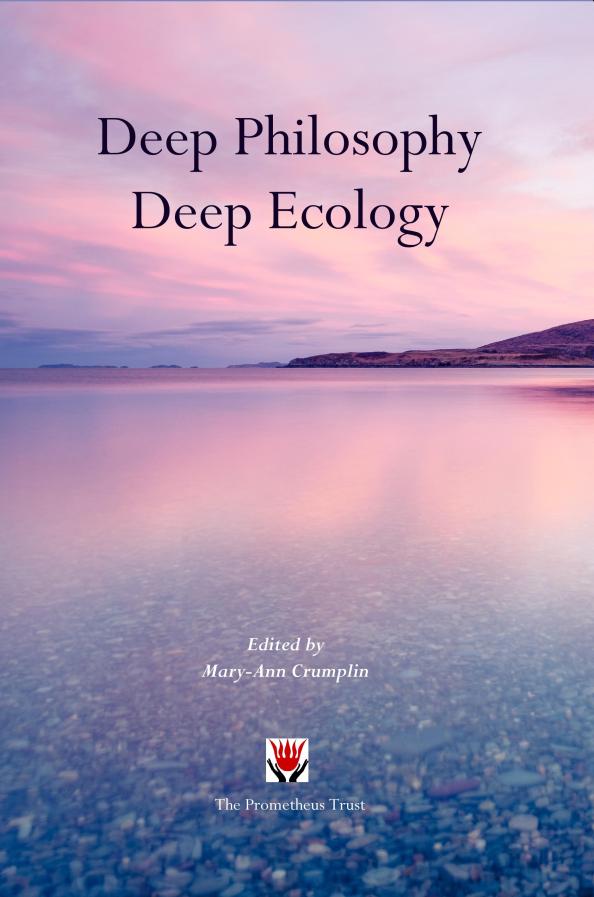
The 'deep ecology' movement challenges humankind to rethink its relationship with the natural world, and believes that anything less will invite failure. This book takes this as a starting point, and offers a number of ways we can radically reset the trajectory of our global civilisation. From Taoism to Platonism, from Hermeticism to St Francis of Assisi, from 'enlightenment' philosophers to post-enlightenment thinkers, the thirteen chapters of Deep Philosophy, Deep Ecology offer a range of responses to the challenge laid down by the movement. The contributors do not speak with a single voice – very far from it – but they join with each other in seeking to find solutions to the crisis that clearly demands our serious attention. You are invited to join them in that search.
Contents:
Delphic Ecology - Tim Addey
The Ibis Omen - Etain Addey
Brotherhood as the Relation between Man and Nature: a comparison between St. Francis of Assisi & the Spiritual Wheel -Valeria Zanon
Plato’s Conscious Universe and the Unity of Things - Stuart Dunbar
The Intelligible Intricacy of the Natural World - Ann van Ryn
An Ecstatic Naturalist Approach to the Anthropocene - Marilynn Lawrence
Navigating the Anthropocene: Insights from the Wisdom of the Corpus Hermeticum - Sally Jeanrenaud & Jean-Paul Jeanrenaud
How Lockean Influence May Contribute to an Ecological Ethos - Paul Fagan
Thinking Ecologically: a post-Enlightenment perspective - Eccy de Jonge
Returning to Wonder - Mary-Ann Crumplin
Do the Deepest Roots of a Future Ecological Civilization Lie in Chinese Soil? - Freya Mathews
The Relation of Crisis to Constant Order - Robert Bolton
Graveyard, incubator or something much stranger? Blind World or Multiworlds versus Deep Ecology and Neoplatonism - Kevin Corrigan
288pp Paperback £12.00 ISBN 978-1898910-701
Buying from the EU - please go here. Please ensure you have selected the appropriate postage/discount from the button’s accompanying drop down menu. Note: we are unable to supply to the US and Canada - please see the ordering page for a link to our North America distributor.
Plotinus or the Glory of Ancient Philosophy
Joseph Moreau
Translated by Robert K Clark
This is the first translation into English of the highly regarded survey of Plotinus and his philosophy by Joseph Moreau, originally published in 1970. Jean Trouillard in Revue des Études Grecques wrote of this:
“The present work lays out a complete outline of Plotinian doctrine, both as a vision of the world and as a method of spiritual life. The meditation unfolds according to the cyclic  or helical scheme of the Neoplatonists. We ascend from the universe, considered as a living whole, then as a system of intelligibles and intelligences, up to the Good which fulfills their unfolding by the exigency which it imparts to them. From this Supreme One we descend again to derivative beings by studying as a matter of course the procession of minds, then that of the soul, and finally the appearance of the sensible. Making our way, we encounter the problems of individuality, of extension, of time and of nature. Everything is thus arranged in order to understand the conversion of souls, which are purified, first from the sensible, then from the intelligible, before reuniting with the unitive presence within themselves.
In this book we rediscover the qualities of an author who could not be considered an objective historian of ideas if he were not a philosopher, nor inversely an authentic philosopher if he were not a historian of the Hellenic heritage. These qualities, indeed, are summed up in a great architectural talent. Holding firmly to the guiding idea, he accurately restores the structure of each part as a function of the whole, and he maintains consciousness of the whole in the reader through the detail.”
256pp Hardback £26.00 ISBN 978-1898910-800
Buying from the EU - please go here. Please ensure you have selected the appropriate postage/discount from the button’s accompanying drop down menu. Note: we are unable to supply to the US and Canada - please see the ordering page for a link to our North America distributor.